
Natural hair colour & Skin Cancer Risk
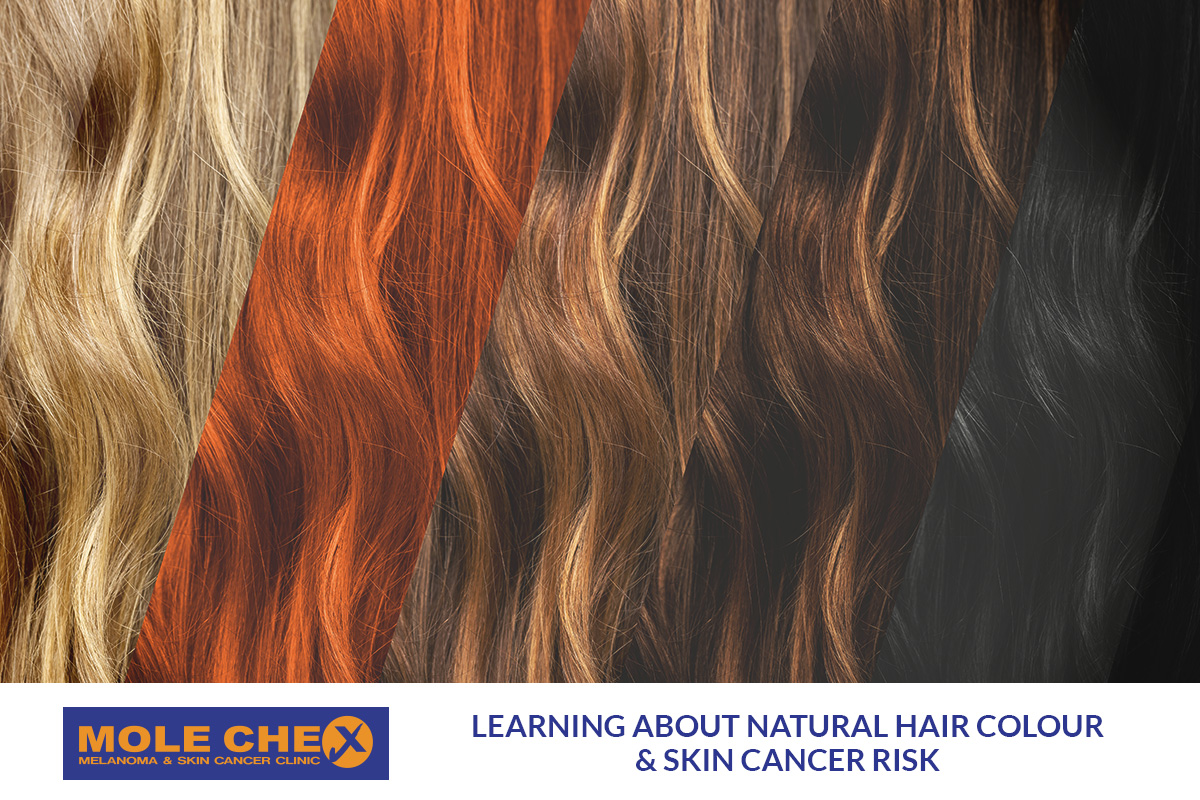
Natural hair colour is not just a cosmetic feature. It can reflect how much pigment your body naturally produces, how your skin responds to ultraviolet radiation, and how easily you may burn in the sun. While anyone can develop skin cancer, people with certain natural hair colours, skin tones and freckling patterns may need to be especially careful in Brisbane’s sunny climate.
Australia has one of the highest rates of skin cancer in the world, and Cancer Council Australia states that about two in three Australians will be diagnosed with some form of skin cancer before age 70. UV exposure remains a major preventable risk factor, but inherited features such as complexion, natural hair colour, eye colour, freckling and mole patterns also matter.
Why does natural hair colour matter?
Natural hair colour is influenced by melanin, the pigment that also helps determine skin and eye colour. People with darker hair and darker skin usually have more eumelanin, a pigment that offers some natural protection from UV radiation. People with naturally red, blonde or light brown hair often have less natural UV protection, particularly when they also have fair skin, freckles or light-coloured eyes.
This does not mean darker-haired people are “safe” from skin cancer. It means risk can differ from person to person. A person with dark hair but many moles, previous sunburns, outdoor work, a family history of melanoma or significant sun exposure may still be at increased risk.
Red hair and melanoma risk
People with natural red hair often have fair skin that burns easily and tans poorly. This combination is strongly associated with higher sensitivity to UV radiation. Cancer Australia lists fair complexion, excessive sun exposure, a history of sunburns, unusual moles and family history of skin cancer as melanoma risk factors.
Red hair is commonly linked with variations in the MC1R gene, which affects pigment production. Many red-haired people produce more pheomelanin and less eumelanin, which can mean less natural defence against UV damage. For this reason, red-haired Brisbane residents should be particularly consistent with sun protection, self-checks and professional skin checks.
Blonde and light brown hair
People with naturally blonde or light brown hair may also be more likely to have fair skin, light eyes and a tendency to burn. These features can increase vulnerability to sun damage over time, especially in Queensland where UV levels can be high for much of the year.
If you have blonde or light brown hair and notice freckles, sunspots, rough patches, changing moles or repeated sunburns, your skin may be showing signs of cumulative UV exposure. A regular skin check can help identify suspicious spots early and provide guidance on prevention.
Dark hair does not remove skin cancer risk
A common myth is that people with dark hair, olive skin or darker skin tones do not need skin checks. This is not true. Skin cancer can occur in all skin types. While people with more pigment may have a lower average risk of some UV-related skin cancers, diagnosis can sometimes be delayed because changes are less expected or harder to see.
People with darker natural hair should still monitor new or changing spots, especially on sun-exposed areas such as the face, ears, neck, scalp, arms, hands and legs. It is also important to check less obvious areas, including the soles of the feet, nails and areas usually covered by clothing.
Hair colour is only one part of your risk profile
Natural hair colour should be considered alongside other skin cancer risk factors. Your risk may be higher if you have:
- Fair or easily sunburnt skin
- Red, blonde or light brown natural hair
- Blue, green or grey eyes
- Many freckles
- Many moles or unusual-looking moles
- A personal or family history of skin cancer
- A history of blistering sunburn
- Outdoor work or regular outdoor sport
- Significant childhood or teenage sun exposure
- Previous tanning bed use
Research has examined complexion features including hair colour, eye colour, skin colour and freckling in relation to melanoma risk, supporting the importance of looking at the whole complexion profile rather than one feature alone.
What should you look for during a skin self-check?
Knowing your skin is one of the most practical habits you can build. Once a month, check your skin in good lighting. Use a mirror or ask someone you trust to help with areas such as your back, scalp and shoulders.
Look for:
- A new mole, freckle or spot
- A mole that changes in size, shape or colour
- A spot that looks different from your other spots
- A sore that bleeds, crusts or does not heal
- A rough, scaly or tender patch
- A mole that becomes itchy, painful or raised
- Dark streaks under nails or unusual spots on palms or soles
The “ugly duckling” sign can be useful. If one mole or lesion looks noticeably different from the others, it should be checked.
Why Brisbane locals should be proactive
Brisbane lifestyles often involve outdoor exposure: weekend sport, gardening, walking, school activities, cycling, building work and beach trips. Even incidental exposure, such as driving, walking at lunch or sitting near windows, can add up over time.
For people with red or fair hair, the effect of repeated UV exposure can be more noticeable because the skin may burn quickly. However, every hair colour group benefits from sun-safe behaviour. Use broad-spectrum sunscreen, wear a wide-brim hat, seek shade, use sunglasses and choose protective clothing when outdoors.
How Molechex can help
Molechex Skin Cancer and Melanoma Clinic provides skin cancer detection, diagnosis, treatment, annual reviews and skin-related services in Brisbane. The clinic’s services include skin checks, skin rejuvenation, surgical procedures for skin cancers, cosmetic services and injectable treatments.
Molechex’s team includes skin and health professionals in Brisbane who are experienced in the detection and treatment of skin cancers and melanomas. The clinic team includes doctors working across Molechex clinics, with some practitioners having specific training and experience in skin cancer medicine, dermoscopy and surgical procedures.
A professional skin check may involve reviewing your risk factors, examining moles and lesions, using dermoscopy where appropriate, discussing suspicious changes and recommending follow-up, monitoring, biopsy or treatment if clinically required.
Cosmetic skin concerns and sun damage
Hair colour and UV sensitivity can also influence visible skin ageing. People who burn easily may notice pigmentation, redness, uneven skin tone, rough texture or fine lines earlier, especially with repeated sun exposure.
Molechex also provides skin rejuvenation and cosmetic skin services in Brisbane, including options such as chemical peels, advanced micro-needling, LED light therapy, PRP, Factor4, cosmetic mole removal and skin tag removal, depending on clinical suitability. Any changing mole, suspicious lesion or irritated spot should be medically assessed before cosmetic treatment is considered.
The key message
Your natural hair colour can help indicate skin cancer risk, but it does not tell the full story. Red and fair-haired people often need extra vigilance. Blonde, brown, black and grey-haired people should not ignore skin changes either.
The safest approach is to combine sun protection, regular self-checks and professional skin assessments based on your personal risk factors. In Brisbane, where UV exposure is part of daily life, this is a practical step for long-term skin health.
Conclusion
If you have natural red, blonde or fair hair, burn easily, have many moles or have noticed a new or changing spot than Molechex can support you with comprehensive skin checks, mole assessments, skin cancer detection and treatment planning in Brisbane. A skin check can help you better understand your personal risk. It helps decide whether any mole, freckle or lesion needs monitoring or further care.
Learn more by reading other articles :