
Understanding Scalp Skin Cancer: Early Detection & Treatments
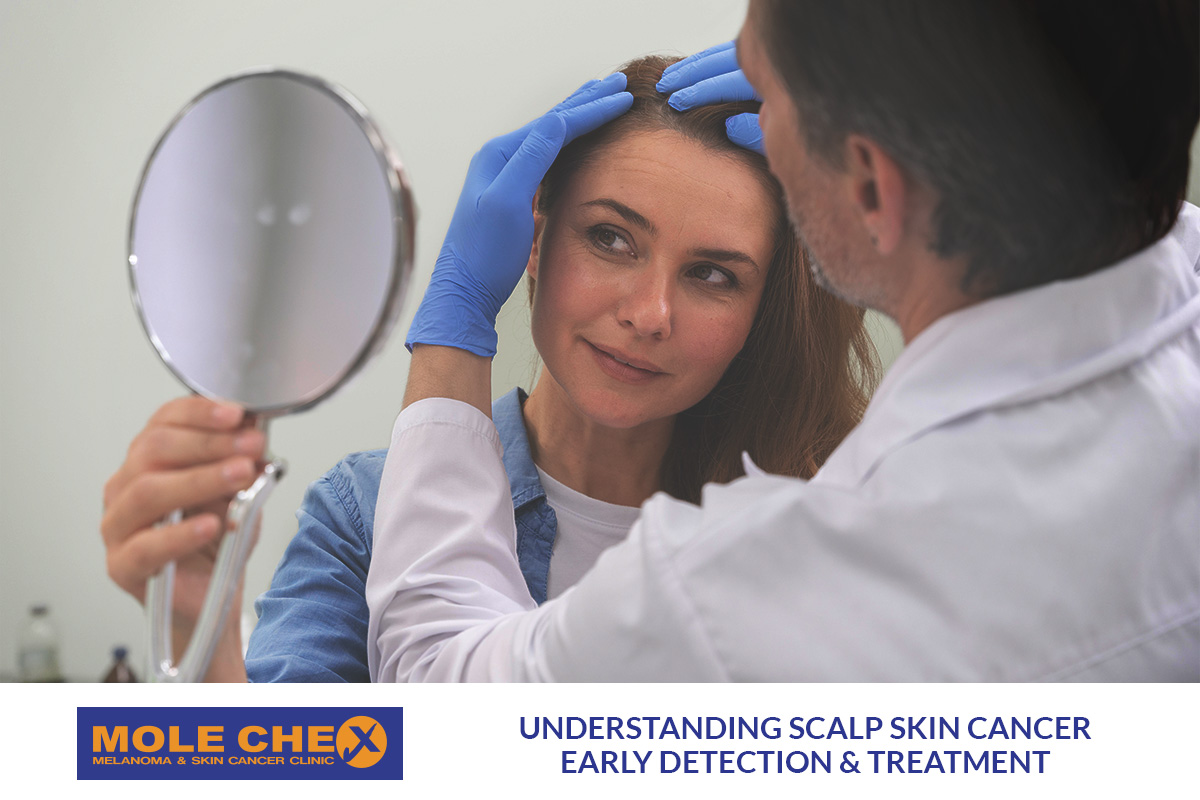
Your hair might be your crowning glory, but the health of your scalp runs far deeper than appearances. The scalp protects your brain, supports sensory functions and connects key lymphatic and vascular pathways. When skin cancer develops on this vital area often hidden under hair it can disrupt essential functions and present serious health risks. In this article, we break down what scalp skin cancer is, who’s at risk, how to detect it early and what treatment options are available.
What Is Scalp Skin Cancer?
Scalp skin cancer refers to malignancies that form in the tissues making up the scalp. These can originate from skin cells, pigment-producing cells (melanocytes), connective tissues, hair follicles or even blood vessels. The most common types are basal cell carcinoma, squamous cell carcinoma and melanoma.
Although hidden by hair, the scalp is highly exposed to UV radiation, especially for people experiencing hair thinning or baldness. When caught early, most forms of scalp cancer are highly treatable. However, if ignored, these cancers can invade deeper tissues, even reaching the skull or brain.
Understanding the Scalp’s Layers and Why Cancer Here Matters
The scalp is made up of five main layers, remembered by the acronym “SCALP”:
- S: Skin – the outer layer rich in hair follicles and sebaceous glands
- C: Connective tissue – dense tissue that carries blood and nerve supply
- A: Aponeurosis – a fibrous sheet where facial and scalp muscles attach
- L: Loose connective tissue – the layer surgeons use to move scalp tissue during reconstruction
- P: Pericranium – the fibrous covering directly over the skull bones
Cancer on the scalp can originate from any of these layers, but most begin in the skin and can later invade deeper levels. The scalp’s rich blood supply and lymphatic drainage make it a potential site for metastasis from other body areas or for rapid cancer spread if untreated.
Who Is at Risk for Scalp Skin Cancer?
Scalp cancer shares many risk factors with other skin cancers but comes with unique considerations due to hair coverage and sun exposure patterns.
High-risk groups include:
- People with fair skin or light hair – less natural UV protection
- Men with thinning or shaved hair – more direct scalp sun exposure
- Outdoor workers – such as tradespeople, farmers and landscapers in Queensland
- Aged over 50 – linked to lifetime cumulative UV exposure
- People with a family history of melanoma or skin cancer
- Immunocompromised individuals – including those on chemotherapy or immunosuppressants
- People with chronic scalp conditions – like psoriasis or lupus
- Users of tanning beds or phototherapy
Hair does offer some protection from UV rays, but it is not foolproof especially with part lines, thinning areas or high sun intensity typical in Queensland.
Common Signs of Scalp Skin Cancer
Scalp cancer symptoms vary depending on the type but often include:
- A non-healing sore, especially one that bleeds or crusts
- A rough, scaly patch that does not go away
- A dome-shaped bump or growth
- Itching or irritation on one spot
- A dark mole that changes in size, shape or colour
- A lesion that oozes or bleeds with minimal contact
- Hair loss around a suspicious lesion
- In advanced cases, numbness, headaches or neurological symptoms
Use the ABCDEs to spot melanoma:
- Asymmetry – one half looks different from the other
- Border – uneven or irregular edges
- Colour – varies or includes unusual tones like grey, red or blue
- Diameter – larger than 6mm
- Evolving – changing in size, shape or sensation
Preventing Scalp Skin Cancer
Protecting your scalp from sun damage is essential, especially in sunny Brisbane. Here’s how you can reduce your risk:
- Wear a wide-brimmed hat when outdoors
- Apply SPF 30+ sunscreen to exposed scalp areas and part lines
- Avoid peak sun hours (10am–3pm) when UV levels are highest
- Avoid tanning beds and unnecessary UV exposure
- Manage chronic scalp inflammation with your GP or skin doctor
- Boost skin defences with oral antioxidants like niacinamide (under medical advice)
- Check your scalp during self-skin checks using a mirror or help from a loved one
- Visit a skin cancer clinic for routine full-body checks, especially if you are high risk
How Is Scalp Skin Cancer Diagnosed?
At Molechex and similar clinics, diagnosis involves:
- Visual examination by a skin doctor or trained GP
- Dermatoscopy – magnified imaging of suspicious lesions
- Skin biopsy – a small sample is sent to pathology for confirmation
- Imaging tests – such as MRI or CT scans if deeper invasion or spread is suspected
Early diagnosis makes treatment simpler and more effective, often preserving hair and skin appearance.
Treatment Options for Scalp Skin Cancer in Brisbane
Treatment depends on the cancer type, location and stage. Options include:
Mohs Surgery
This precision surgery removes skin cancer layer by layer under a microscope until no cancer remains. It is the gold standard for scalp basal cell and squamous cell carcinoma and offers high cure rates with minimal tissue loss.
Wide Local Excision (WLE)
A traditional surgical method involving removal of the cancer and some surrounding tissue. Suitable when Mohs surgery is not available or if cancer is deeper.
Topical Treatments
For early, shallow cancers like superficial BCC, creams may be prescribed. These are less effective for invasive cancers.
Radiation Therapy
Used when surgery is not an option or for residual cancer. Effective, but not ideal for younger patients due to long-term side effects.
Photodynamic Therapy (PDT)
Involves applying a photosensitiser and activating it with light to destroy cancer cells. Useful for low-risk,
Chemotherapy or Immunotherapy
Reserved for advanced or metastatic skin cancer. Options include biologics like interferon or checkpoint inhibitors for melanoma.
After Treatment: Preventing Recurrence
After treatment, it is crucial to monitor your scalp regularly and follow medical advice. Tips include:
- Attending follow-up skin checks
- Using sun protection daily
- Managing chronic scalp conditions
- Maintaining a healthy immune system
- Performing monthly self-checks
Scalp skin cancer can recur, particularly in high-risk individuals, so long-term monitoring is essential.
Conclusion: Why Early Action Matters
Scalp skin cancer can be difficult to detect but easy to treat when caught early. If you notice a suspicious lesion or persistent irritation on your scalp, do not ignore it. The scalp’s unique structure makes it both vulnerable and critical and timely treatment prevents more serious complications.
At Molechex, Brisbane-based clinic, our skin doctors specialise in early detection, diagnosis and treatment of all skin cancers including scalp lesions. We combine advanced diagnostic tools with medical expertise to offer safe, effective care tailored to each patient.
Learn more by reading other articles :