
A Skin Check, Explained: What to Expect at a Skin Doctor in Brisbane
Have you ever noticed a changing mole and wondered whether it needs attention? Perhaps you have considered a professional skin check but feel unsure about the process.
A skin check in Brisbane typically involves a doctor examining your skin for unusual moles, lesions and other changes. The examination may include areas that are difficult to see yourself.
Understanding what happens during a skin check can help you prepare questions and discuss your concerns. Here is what you may experience during a skin examination at MoleChex.
What Is a Professional Skin Check?
A professional skin check is a medical examination that helps identify skin changes requiring further assessment.
During the consultation, a doctor examines your skin and reviews any concerning spots. They may also assess your individual risk factors for skin cancer.
A skin check may involve:
- Examining moles, freckles and other skin markings.
- Looking for unusual pigmentation or changing lesions.
- Checking areas commonly exposed to sunlight.
- Examining less-visible areas, including the scalp, back and feet.
- Using a dermatoscope to inspect selected spots more closely.
Not every unusual spot indicates skin cancer. However, certain changes may require additional investigation.
A clinical examination cannot guarantee detection of every skin cancer. Your doctor will explain any findings and recommended next steps.
Before Your Skin Check: Getting Prepared
Preparing for your appointment can help your doctor understand your skin concerns.
At MoleChex, we recommend keeping your skin clean and avoiding heavy makeup when facial areas require examination.
If you work outdoors, remove dirt or grease that could obscure skin markings.
Before your consultation, consider the following:
- Know your concerns: Identify any new, changing, bleeding or unusual spots.
- Review your medical history: Remember previous skin cancers, biopsies or treatments.
- Consider family history: Tell your doctor about relatives who have experienced melanoma or other skin cancers.
- Prepare your questions: Ask about specific spots, sun exposure or suitable follow-up.
If you have photographs showing a changing spot, consider bringing them.
First-time MoleChex patients should allow time for registration paperwork. Bring your Medicare card and any relevant concession cards.
Step One: Discussing Your Skin Health
Your skin check may begin with a conversation about your medical history and skin concerns.
The doctor may ask whether you have noticed changes in existing moles or developed new spots.
They may also discuss your previous sun exposure, sunburn history, outdoor activities and family medical history.
Factors such as fair skin, numerous moles and previous skin cancer can influence your risk.
These questions help the doctor understand your circumstances and consider appropriate examination and follow-up.
You can also mention concerns about spots that itch, bleed, crust or fail to heal.
Step Two: A Head-to-Toe Skin Examination
A comprehensive skin check involves examining areas across your body, including skin that receives little sunlight.
Your doctor may ask you to remove some clothing while keeping your underwear on.
The examination may include your:
- Face, ears, neck and scalp.
- Chest, stomach, shoulders and back.
- Arms, hands, legs and feet.
- Palms, soles and areas between your toes.
The doctor may ask about areas beneath clothing that require assessment.
Your privacy and consent remain important throughout the examination. You can ask questions, request an explanation or decline any part.
Tell your doctor if you feel uncomfortable or need additional privacy arrangements.
Step Three: Examining Spots with a Dermatoscope
Not every suspicious skin feature is visible to the naked eye.
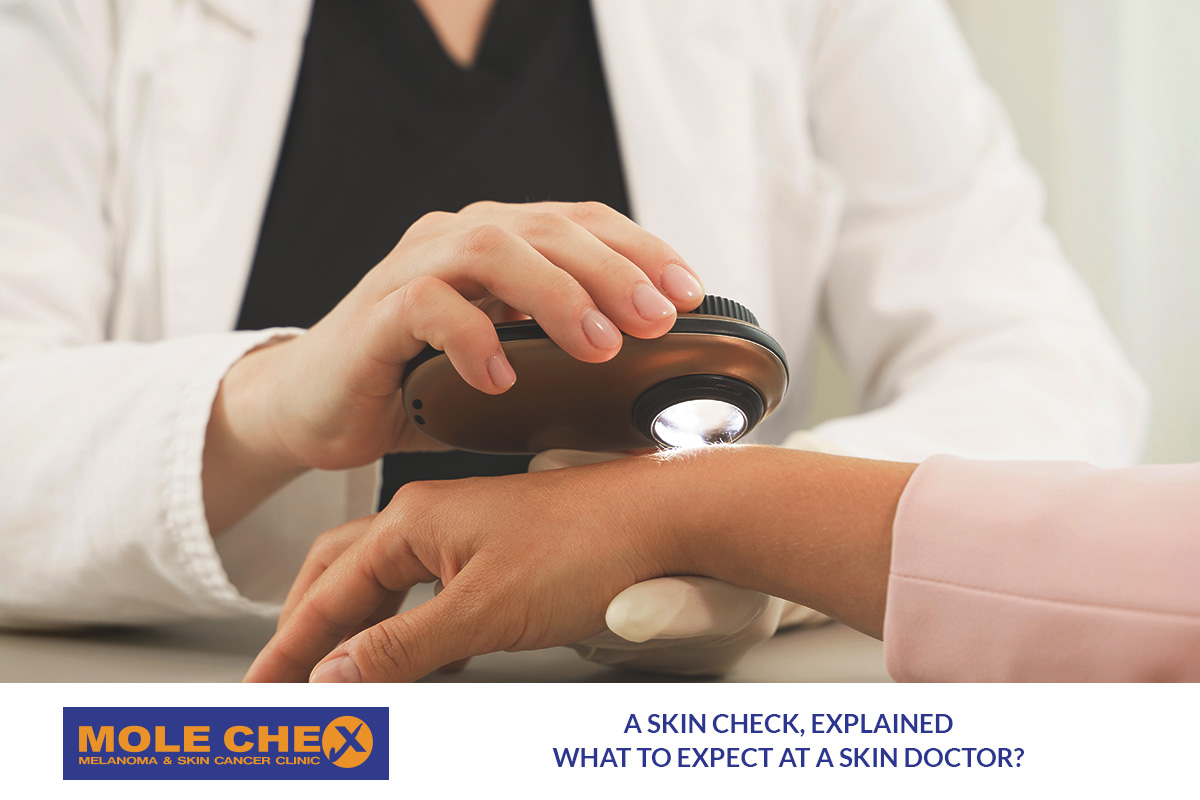
Doctors may use a dermatoscope, a handheld instrument combining magnification and lighting. Dermoscopy allows closer inspection of structures and pigmentation patterns within the skin.
The doctor may examine a mole’s shape, colour distribution, borders and other visible features. This assessment helps distinguish some benign markings from lesions that may need further investigation.
Dermatoscopy itself is non-invasive and generally involves placing the instrument near or against the skin.
However, dermoscopy cannot confirm every diagnosis. Some lesions require a biopsy or additional assessment.
Step Four: What Happens If a Suspicious Spot Is Found?
Finding an unusual spot does not automatically mean you have skin cancer.
Your doctor may recommend monitoring, further examination, biopsy or referral, depending on the findings.
A skin biopsy involves collecting tissue for laboratory examination. It helps confirm the diagnosis when clinical examination alone is insufficient.
If a biopsy becomes necessary, your doctor will explain the proposed procedure, potential risks and alternatives.
A local anaesthetic is commonly used during the procedure. Some discomfort, bleeding or scarring may occur. Not every skin check involves a biopsy, and treatment decisions depend on individual clinical findings.
Step Five: Understanding Your Results
After examining your skin, your doctor will discuss the findings and any recommended next steps.
If the examination reveals nothing suspicious, they may discuss your risk factors and future monitoring. If a spot requires further investigation, your doctor should explain why and outline the available options.
Laboratory results from biopsies take additional time. Your clinic will explain how and when you can expect further information.
You may also receive advice about checking your skin at home and recognising changes.
Remember, a normal examination today does not prevent new skin conditions from developing later.
How Long Does a Skin Check Take?
The appointment length depends on your skin concerns, medical history and examination requirements.
Someone with numerous moles or several changing spots may require additional assessment time.
If the doctor identifies a concerning lesion, they may recommend another appointment for further investigation.
A routine skin examination usually does not require recovery time. A biopsy or other procedure may involve additional aftercare.
Your clinic can provide information about appointment arrangements and applicable consultation fees.
How Often Should You Have a Skin Check?
There is no single skin-check schedule suitable for everyone.
Australia does not have a population-wide skin cancer screening program. Doctors generally recommend follow-up according to individual risk and clinical concerns.
People with previous skin cancer, numerous unusual moles or a strong family history may need closer monitoring.
Others may require assessment when new or changing skin spots appear. Between appointments, become familiar with your skin and watch for unusual changes.
Seek medical advice promptly if a spot changes, bleeds or does not heal. Do not wait for a scheduled review.
Skin Checks and Brisbane’s Sun Exposure
Brisbane residents experience substantial ultraviolet (UV) exposure throughout the year. UV radiation contributes to skin damage and increases the risk of developing skin cancer. When the UV Index reaches 3 or above, combine sun protection measures.
Wear protective clothing, apply broad-spectrum SPF50+ sunscreen, seek shade, and use a suitable hat and sunglasses.
These habits help reduce UV exposure but cannot eliminate skin cancer risk. Professional assessment and awareness of your own skin remain important.
Understanding Your Skin with MoleChex Brisbane
At MoleChex, our doctors provide comprehensive skin examinations and assess suspicious moles, lesions and other skin changes. Our medical team includes Dr Sunny Modi, Dr Rajshree Kharia and Dr Bradley Coleman, alongside other doctors.
Our skin check services are available at MoleChex clinics in Annerley, Carindale Westfield and Coorparoo Junction.
During your consultation, our doctors can examine concerning spots, discuss findings and recommend further investigation when clinically appropriate.
No referral is required for a MoleChex skin check. Our clinics operate as private billing practices, and consultation fees vary. Whether you have noticed a changing mole or want guidance about your personal skin cancer risk, a medical consultation can help clarify the next steps.
Understanding what happens during a skin check is a useful starting point. Knowing when to seek assessment is just as important.
*Note: The information in the article is for information purposes only. This information is general in nature and does not replace professional medical advice. Please seek doctors’ appointment for actual treatment or medical condition.
Learn more by reading other articles :