
Moles, Freckles and Other Spots: What’s the Difference?
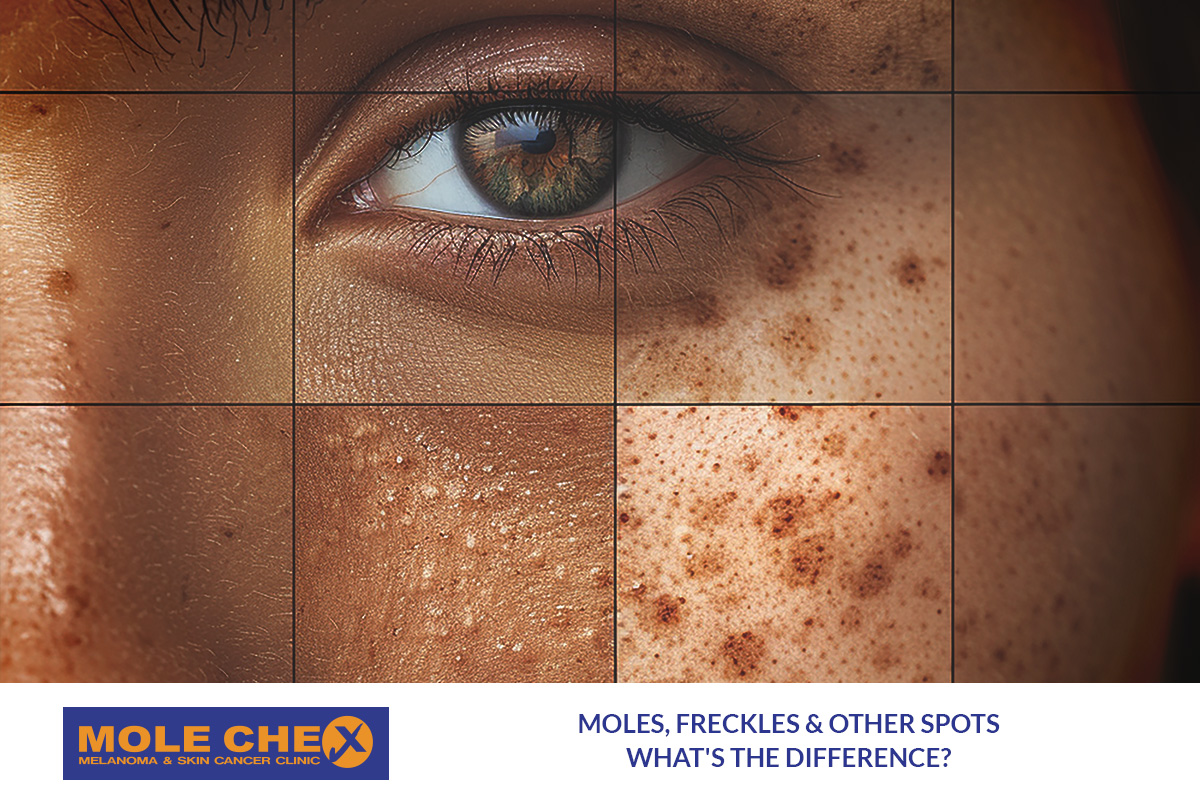
Your skin tells a story. Some marks have been there since childhood. Others appear after years of Queensland sunshine. It is natural to wonder whether a freckle, mole or new spot needs attention.
Moles and freckles often look similar, yet they develop in different ways. Other markings, including sunspots and rough patches, add to the confusion. Knowing the basics helps you notice changes without diagnosing yourself.
Moles and Freckles: What’s the Difference?
A mole forms when pigment-producing cells, called melanocytes, grow in a cluster. A freckle usually develops when existing skin cells produce more pigment. Both can be brown, but they are not the same.
Moles may be flat or raised. Freckles are usually small and flat. Ordinary freckles often become darker during sunnier months. Many moles remain relatively stable over time.
Appearance alone cannot reliably establish whether a spot is harmless. If something looks new, unusual or different, seek medical advice.
What Are Moles?
Moles, also called melanocytic naevi, are common skin growths. They often appear during childhood or adolescence. Some people develop new moles in adulthood.
A typical mole may be round or oval, with a fairly even colour and clear outline. Colours range from pink and skin-toned to brown or black. Some moles sit flat, while others rise above the skin.
Most moles are benign. However, a spot that looks like a mole could sometimes represent skin cancer. A mole can also change for reasons unrelated to cancer.
Pay attention to changes in size, shape, colour, texture or sensation. A spot that stands apart from your other moles deserves particular attention.
Having many moles can also increase melanoma risk. A doctor can discuss your personal risk and appropriate follow-up.
What Are Freckles?
Freckles are small areas of increased skin pigment. They commonly appear on the nose, cheeks, shoulders and arms. Genetics and ultraviolet (UV) exposure influence their appearance.
Common freckles, called ephelides, often darken after sun exposure. They may fade when UV exposure decreases. They are usually flat and fairly even in colour.
Freckles themselves are generally harmless. However, freckles do not make the surrounding skin immune to sun damage. People with many freckles may have skin that is more sensitive to UV radiation.
A familiar freckle that changes significantly should not automatically be dismissed. Ask a GP to assess any new or concerning feature.
What About Sunspots and Age Spots?
Sunspots, sometimes called age spots or solar lentigines, are another type of pigmented marking. They typically develop after repeated UV exposure over time.
Unlike ordinary freckles, solar lentigines often remain visible throughout the year. They may appear on the face, hands, forearms or shoulders. Most are flat, with a fairly defined edge.
Solar lentigines are generally benign. However, some early melanomas can resemble a dark sunspot. This makes professional assessment important when a mark changes or looks unusual.
The term “sunspot” also causes confusion. People sometimes use it for rough, scaly patches caused by UV damage. These may be actinic keratoses and require medical assessment.
Other Common Skin Spots Explained
Not every spot is brown. Skin colour, texture and growth patterns can help explain what you are seeing.
Seborrhoeic keratoses are common, non-cancerous growths. They often look waxy, rough or stuck onto the skin. Their colour can range from skin-toned to dark brown.
Cherry angiomas are small red or purple spots made from clusters of blood vessels. They are usually harmless and become more common with age.
Skin tags are soft, small growths often found around the neck, underarms or skin folds. Friction may irritate them, but they are generally benign.
Actinic keratoses are rough, scaly patches associated with cumulative UV exposure. Some can develop into squamous cell carcinoma. A clinician should assess suspected actinic keratoses.
Post-inflammatory marks can appear after acne, insect bites or skin irritation. These marks may fade slowly, although their appearance varies.
Different conditions sometimes look alike. Avoid trying to remove, burn or bleach an unexplained spot at home.
When Should a Mole or Skin Spot Be Checked?
The ABCDE guide can help you recognise possible melanoma warning signs:
A — Asymmetry: One half looks different from the other.
B — Border: Edges become uneven, notched or blurred.
C — Colour: A spot develops uneven or multiple colours.
D — Diameter: A spot grows, especially if growth continues.
E — Evolving: Size, shape, colour or symptoms change over time.
The ABCDE guide is helpful, but it does not identify every skin cancer. Some melanomas form as firm, growing nodules without the typical colour changes.
Watch for spots that itch, bleed, crust or fail to heal. A new pink, pearly or scaly lesion can also need assessment. Skin cancers do not always resemble dark moles.
Do not wait for pain. Many skin cancers cause little discomfort in their early stages.
Can You Check Your Skin at Home?
It is always good idea to keep track of skin spots. Get familiar with what is normal for your skin. Use good lighting and check your body from head to toe.
Remember the scalp, behind the ears, back, soles and between the toes. Check beneath and around nails, too. A mirror or trusted person can help with hard-to-see areas.
Notice any changing or unusual mark. Photographs may help track visible changes, but they cannot replace a clinical examination.
The right frequency for professional checks depends on your individual risk. Your GP can advise you based on your skin, family history and sun exposure.
Does Brisbane’s Climate Make a Difference?
Queensland’s UV conditions make everyday sun protection particularly relevant. UV radiation can damage skin even when the weather feels cool or cloudy.
When the UV Index reaches 3 or above, use the five SunSmart steps. Wear protective clothing, apply broad-spectrum SPF50+ sunscreen, use a broad-brimmed hat, seek shade and wear sunglasses.
Sun protection helps reduce future UV damage. It does not remove the need to assess suspicious changes.
Understanding Your Skin With MoleChex Brisbane
MoleChex provides comprehensive skin checks through its Brisbane clinics in Annerley, Carindale and Coorparoo. Our doctors examine skin concerns and can assess areas that are difficult to see yourself.
During a skin check, a doctor may use a handheld dermatoscope to examine a suspicious mark more closely. If needed, they may recommend further investigation, including a biopsy.
A skin check cannot guarantee that every skin cancer will be found. Your doctor can explain findings, discuss possible next steps and advise on follow-up.
A mole, freckle or sunspot may be harmless, but significant changes deserve attention. If you notice an unusual or evolving mark, arrange a medical assessment rather than waiting for a routine review.
*Note: The information in the article is for information purposes only. This information is general in nature and does not replace professional medical advice. Please seek doctors’ appointment for actual treatment or medical condition.
Learn more by reading other articles :