
Beyond the ‘ABCDE’ Rule: The Subtle Signs of Nodular Melanoma You Might Be Missing
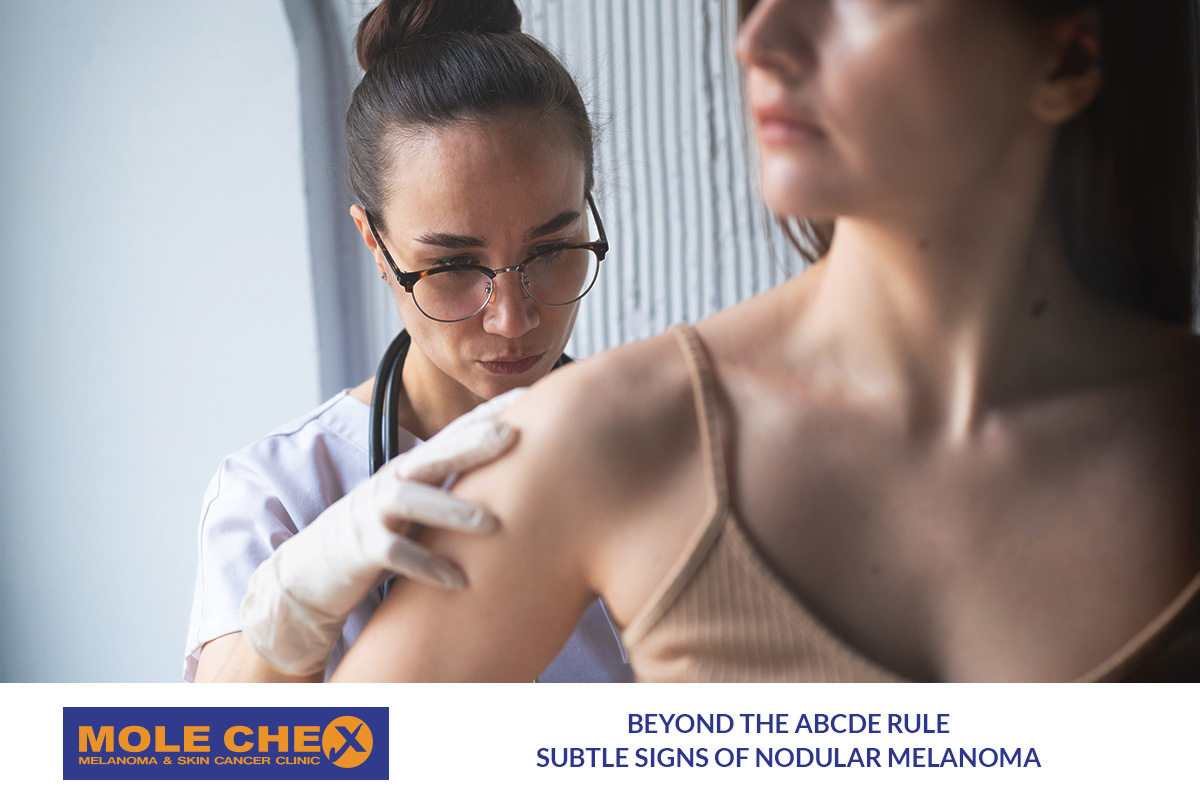
Most people have heard of the ABCDE rule for checking suspicious moles. It remains a valuable guide for noticing possible melanoma changes. However, not every melanoma follows the familiar pattern. Nodular melanoma can look surprisingly different. Instead of spreading across the skin first, it tends to grow deeper more quickly. That makes a new or changing lump especially important to assess.
Why the ABCDE Rule Does Not Tell the Whole Story?
The ABCDE rule encourages people to look for Asymmetry, irregular Borders, changing Colours, Diameter and Evolution.
These signs can help identify many melanomas. However, nodular melanoma may not show several classic ABCDE features.
A nodular melanoma can appear relatively round or symmetrical. It may also have one consistent colour. Some lesions appear black or brown, while others look red, pink or skin-coloured.
This means a spot can look less alarming than expected.
The important difference is often how the lesion feels and behaves, rather than how irregular it looks.
Understanding Nodular Melanoma
Nodular melanoma is an invasive type of melanoma.
Many melanomas initially spread horizontally across the upper layers of the skin. Nodular melanoma has a stronger vertical growth pattern. It can grow down into deeper skin layers while becoming raised above the surface.
That behaviour makes timely assessment important.
A person may first notice a small bump that was not there before. They may then realise that it has become larger, firmer or more prominent over several weeks.
It does not need to look like the typical melanoma photograph you may have seen online.
Remember EFG: Elevated, Firm and Growing
Alongside ABCDE, Australians should also know the EFG rule.
Elevated
The spot sits above the surrounding skin or becomes increasingly raised.
Many harmless moles and skin growths are raised. Elevation alone does not mean melanoma. However, a newly elevated lesion deserves more attention when it continues changing.
Firm
The lesion may feel noticeably firm when compared with the surrounding skin.
A harmless skin growth can also feel firm. The concern increases when firmness appears alongside recent growth or another change.
Growing
Growth is particularly important.
Nodular melanoma can change over weeks or months rather than remaining stable for years. You may notice increasing height, width or thickness.
A lesion that keeps enlarging should not simply be monitored indefinitely at home.
The EFG rule exists because nodular melanoma may not satisfy the traditional ABCDE checklist. Cancer Council Australia includes Elevated, Firm and Growing characteristics in guidance for nodular melanoma.
The Spot May Not Be Dark
One common misconception is that melanoma must look very dark.
Nodular melanoma can certainly appear brown or black. However, some nodular melanomas contain little visible pigment. They can appear pink, red or close to normal skin colour.
Some nodular melanomas are non-pigmented and may lack traditional ABCDE warning signs. This makes skin awareness particularly important.
Do not dismiss a new lump simply because it is not dark.
Other Changes Worth Discussing with a Doctor
A suspicious lesion may show other changes alongside the EFG signs.
These can include:
- Bleeding without an obvious injury
- Crusting or ulceration
- Persistent itching or stinging
- Increasing tenderness
- A smooth or shiny surface
- A rough or unusual surface
- Rapid change in size or thickness
- A spot that looks different from surrounding lesions
None of these signs automatically means melanoma.
Many harmless skin conditions can cause lumps, bleeding or irritation. The purpose of recognising these changes is not self-diagnosis. It is knowing when professional assessment makes sense.
Why Touch Can Matter as Much as Appearance?
Most skin-check advice focuses on looking.
For nodular melanoma, feeling the skin can also provide useful information. While checking your skin, gently notice whether a new lesion feels different from nearby spots. Pay attention to something that has become unusually firm, raised or thickened.
Do not repeatedly press or irritate a concerning lesion. Instead, note the change and arrange a medical review.
A photograph can help you remember how the spot looked previously. However, photographs cannot tell you how deep a lesion extends beneath the surface.
They also cannot replace clinical assessment.
Do Not Wait for Every Warning Sign
People sometimes delay medical advice because their spot does not tick every ABCDE box.
That can create false reassurance. A lesion does not need to be asymmetrical, multi-coloured and larger than six millimetres before you ask about it.
The behaviour of the spot matters. A new lump that continues growing deserves attention even when it looks tidy, round or evenly coloured.
Likewise, a pink bump should not automatically be dismissed because it does not look like a traditional dark mole. If you notice persistent change, let a doctor assess it.
What Happens During a Skin Assessment?
A doctor will usually begin by examining the lesion and asking about its history.
Useful information includes when you first noticed the spot and whether it has changed. Mention any growth, bleeding, itching, tenderness or colour change.
Doctors trained in skin cancer medicine can use dermoscopy to examine structures that are difficult to see with the naked eye.
If a lesion looks concerning, the doctor may discuss further investigation. This can include biopsy or removal when clinically appropriate.
Pathology provides the diagnosis when tissue requires testing.
How Molechex Can Help Brisbane Patients?
At Molechex, our Brisbane team provides professional skin checks and assessment of suspicious lesions.
Our doctors have additional training and experience in skin cancer detection and management. High-definition dermoscopy forms part of the clinic’s skin assessment services.
Patients can access Molechex clinics in Annerley, Carindale and Coorparoo Junction.
If you have noticed a firm, growing lump or another changing skin lesion, our doctors can assess the area and discuss appropriate next steps.
Depending on the findings, these steps may include monitoring, biopsy, treatment or further referral.
The goal is not to assume that every unusual bump represents cancer. It is to investigate concerning changes appropriately.
Look Beyond the Classic Mole Checklist
The ABCDE rule remains an important skin-awareness tool, but it should not become the only rule you follow.
Nodular melanoma reminds us that dangerous skin changes do not always look dramatic.
Sometimes the warning sign is simply a lump that was not there before.
Sometimes it is a spot becoming firmer.
Sometimes it is a bump that continues growing while remaining relatively symmetrical.
Remember EFG: Elevated, Firm and Growing.
If something on your skin is changing quickly or feels noticeably different, consider arranging a prompt medical assessment rather than waiting for more warning signs.
For Brisbane residents concerned about a new or changing lump, Molechex provides skin cancer checks and suspicious lesion assessments across Annerley, Carindale and Coorparoo Junction.
Early assessment can provide the most important thing a photograph or online checklist cannot: an individual medical evaluation and a clear plan for what happens next.
*Note: The information in the article is for information purposes only. This information is general in nature and does not replace professional medical advice. Please seek doctors’ appointment for actual treatment or medical condition.
Learn more by reading other articles :