
Suspicious Mole: Why “Ghosting” a Skin Change Is the Real Halloween Horror Story
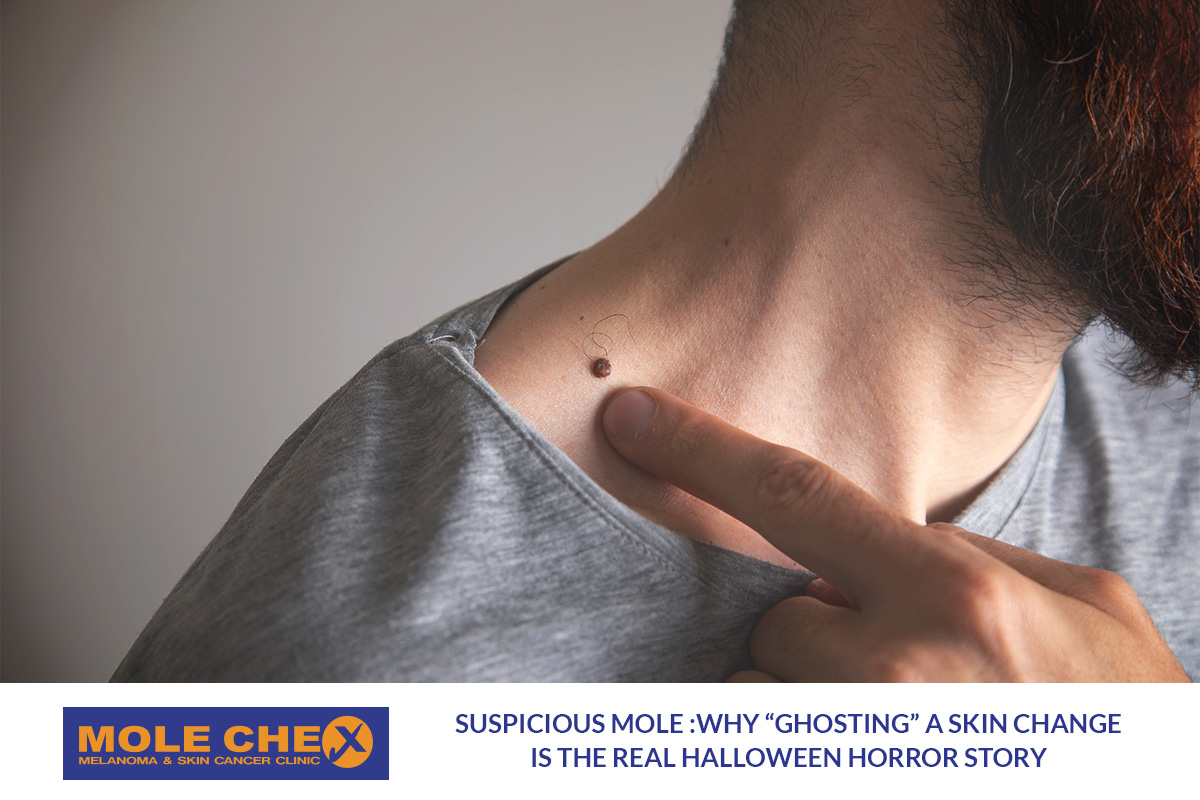
Noticed a mole that looks different, changed recently, or simply makes you uneasy? Fear can make avoidance feel easier. Yet “ghosting” a suspicious skin change rarely removes the worry. For Brisbane residents, a calm medical review can replace uncertainty with a clear next step.
The Scariest Part Is Often the Waiting
Halloween gives us ghosts, shadows and things that go bump in the night. A changing mole can create a different kind of fear. You notice something unusual, feel a rush of anxiety, then decide not to look again.
Maybe it will fade.
Maybe it has always looked like that.
Maybe checking it will make the situation “real”.
That reaction is understandable. Avoidance can give short-term relief because it postpones an uncomfortable answer. The problem is that your skin does not respond to avoidance. The unanswered question stays with you.
Most moles are harmless. A suspicious-looking spot also does not automatically mean skin cancer. However, a new or changing spot deserves proper assessment. Medical review is the practical way to find out what you are dealing with.
Why People “Ghost” a Suspicious Mole?
Health anxiety often follows a simple pattern. First comes the trigger: a new spot, colour change, itch, bleed, or unusual shape. Then comes the frightening thought. After that, avoidance can feel like protection.
You might stop checking the spot. You may avoid booking an appointment. Some people repeatedly search images online, then feel more anxious. Others wait for the mole to disappear on its own.
The relief from avoidance usually lasts only a short time. Uncertainty returns because the original question remains unanswered.
A better approach is to turn uncertainty into information. A doctor can examine the spot, consider your personal risk factors, and discuss the next step. That step may be simple monitoring. It may involve dermoscopy, photography, a biopsy, or treatment when clinically appropriate.
What Makes a Mole Worth Checking?
You do not need to diagnose your own skin. In fact, photographs online cannot reliably tell you whether your spot is harmless.
Instead, pay attention to change and difference.
The ABCDE guide can help. A means asymmetry. B means an irregular border. C means varied or changing colour. D means a spot that is getting larger. E means evolving, including changes in size, shape, colour, texture, or behaviour.
Also notice the “ugly duckling”. This means a spot that looks different from your other moles.
Other reasons to seek medical advice include bleeding, itching, crusting, persistent soreness, or a spot that does not heal.
None of these signs confirms cancer. They simply give you a reason to arrange professional assessment rather than guess.
“I’ll Wait and See” Can Quietly Become Months
Waiting a few days to organise an appointment is different from repeatedly postponing a concern.
Avoidance often hides behind reasonable-sounding thoughts. “I’m busy this week.” “I’ll check after the holidays.” “It probably hasn’t changed.” “I don’t want to overreact.”
Weeks can become months.
If a spot has changed, looks different, or concerns you, it is reasonable to ask a doctor about it. Earlier assessment can also reduce the mental load of wondering.
The goal is not panic. The goal is clarity.
A Simple Way to Break the Avoidance Loop
If fear has stopped you from acting, make the first step small.
Start by acknowledging what you noticed. Write down the location of the spot and the change that concerned you. If useful, take a clear dated photo for your own record. Do not use a photo as a substitute for medical advice.
Then arrange an assessment.
You do not need to arrive knowing the diagnosis. That is the doctor’s role. Your job is simply to explain what you noticed and when it changed.
If appointments make you anxious, tell the clinic when you arrive. You can also bring a support person if that makes the visit easier.
One small action can interrupt weeks of avoidance.
Why Brisbane Skin Awareness Matters?
Brisbane life often means plenty of time outdoors. Work, sport, gardening, school runs and weekend activities can all add to cumulative ultraviolet exposure.
UV radiation is a major cause of skin cancer in Australia. That makes sun protection and skin awareness important throughout the year, not only in summer.
Regularly getting to know your own skin can help you notice something new or different. Pay attention to areas that are easy to miss, including the scalp, back, ears, feet and between the toes.
Your personal skin-check schedule should reflect your individual risk. A doctor can help you decide what is appropriate based on your history, skin type and previous findings.
How Molechex Can Help?
Molechex Skin Cancer and Melanoma Clinic provides skin checks and skin cancer care across Brisbane, with clinics in Annerley, Carindale and Coorparoo.
Our doctors have additional training and experience in skin cancer medicine. Depending on the doctor, this includes areas such as dermoscopy, skin cancer diagnosis, biopsies, surgery and ongoing management.
During a skin assessment, a doctor can examine a concerning spot and review other areas of your skin. If something needs further investigation, they can explain the available next steps. Where appropriate, this may include biopsy, treatment, follow-up, or referral.
That process turns “What if?” into an informed plan.
Don’t Let Fear Make the Decision for You
The real Halloween horror story is not noticing a mole. It is allowing fear to keep you from getting an answer.
A suspicious spot may turn out to be harmless. It may need monitoring. It may need further investigation. You cannot know by ignoring it.
If you have noticed a new, changing, bleeding, itching, or unusual spot, consider arranging a skin check with a Molechex doctor in Brisbane. A professional assessment can provide clearer information and an appropriate next step.
Do not ghost the spot that keeps crossing your mind. Give it the attention it deserves.
*Note: The information in the article is for information purposes only. This information is general in nature and does not replace professional medical advice. Please seek doctors’ appointment for actual treatment or medical condition.
Learn more by reading other articles :