
Outdoor Work and UV Exposure in Queensland
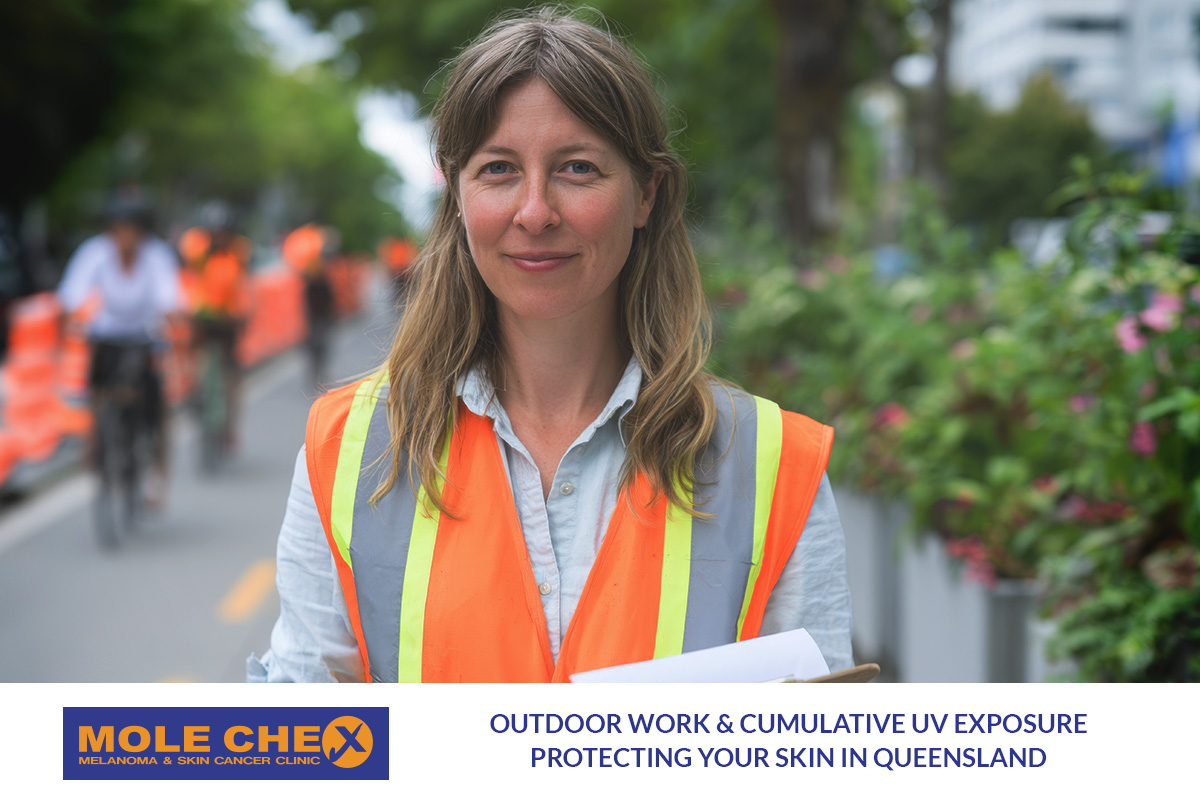
For many Queensland workers, spending hours outdoors is part of everyday life. From construction sites to landscaping jobs, sunshine often comes with the territory. However, repeated sun exposure can affect your skin, even without noticeable sunburn. Occupational UV exposure in Queensland is an important workplace health concern. Ultraviolet (UV) radiation can damage skin cells and contribute to skin cancer over time.
Understanding cumulative UV exposure helps outdoor workers recognise risks, adopt protective habits and identify skin changes that may need medical attention.
What is Cumulative Occupational UV exposure?
Cumulative UV exposure refers to the total ultraviolet radiation your skin receives over time.
Every outdoor shift can contribute to this exposure. Short periods under the sun can add up across months, years and decades.
Unlike visible sunburn, UV-related skin damage may develop without immediate warning signs.
Two types of ultraviolet radiation are particularly relevant:
- UVA: Penetrates deeper into the skin and contributes to premature skin ageing and skin damage.
- UVB: Affects the skin’s outer layers and contributes to sunburn and DNA damage.
Both UVA and UVB contribute to skin cancer risk.
Repeated exposure can increase the likelihood of developing certain skin cancers, particularly basal cell carcinoma and squamous cell carcinoma.
Melanoma risk also relates to UV exposure, although individual risk patterns vary.
Why Are Outdoor Workers in Queensland at Greater Risk?
Queensland experiences high UV levels throughout much of the year.
Workers who spend extended periods outside may receive substantially more occupational UV exposure than indoor workers.
Some occupations face particularly frequent exposure:
- Construction workers: Long shifts on open building sites and reflective surfaces.
- Landscapers and gardeners: Repeated exposure while maintaining outdoor spaces.
- Roofers and tradespeople: Limited shade while working on elevated structures.
- Farmers and agricultural workers: Extended outdoor activities across large properties.
- Traffic controllers: Prolonged exposure while managing roadside work.
- Delivery workers: Regular exposure during outdoor collections and deliveries.
Even workers who alternate between indoor and outdoor activities can accumulate significant UV exposure.
The overall risk depends on exposure duration, UV intensity, protective measures and individual factors.
Can UV Radiation Damage Skin Without Sunburn?
Yes. Sunburn is not the only indication of UV-related skin damage.
Ultraviolet radiation can affect skin cells without producing obvious redness or discomfort.
A worker might complete several outdoor shifts without burning. However, their skin may still receive substantial UV exposure.
Over time, repeated exposure can contribute to:
- Uneven pigmentation and sunspots.
- Fine lines and premature skin ageing.
- Rough or scaly sun-damaged patches.
- Changes in skin texture.
- Increased risk of certain skin cancers.
Visible changes do not reliably show the full extent of UV damage.
This makes consistent sun protection important, even when your skin appears unaffected.
Does Cloud Cover Reduce Occupational UV Exposure Risk?
Clouds can reduce UV exposure, but they do not provide reliable protection.
Significant UV radiation can still reach your skin on overcast Queensland days.
Temperature also provides little indication of UV intensity.
A cool, breezy morning may feel comfortable while UV levels remain high.
The UV Index provides a more useful guide.
When the UV Index reaches 3 or above, sun protection is recommended.
Outdoor workers should also consider prolonged exposure and reflective environments when assessing workplace risks.
Checking the daily UV forecast can help workers and employers plan suitable protection.
Five Practical Sun Protection Habits for Outdoor Workers
Effective workplace sun protection involves several measures working together.
Slip on Protective Clothing
Choose long-sleeved, collared shirts and long trousers where practical. Look for closely woven fabrics with appropriate ultraviolet protection factor (UPF) ratings. Protective workwear should also suit the job’s heat and safety requirements.
Slop on Broad-Spectrum Sunscreen
Apply broad-spectrum, water-resistant SPF50+ sunscreen generously to exposed skin.
Apply it approximately 20 minutes before outdoor exposure. Reapply at least every two hours while outdoors, and after swimming, sweating or towel-drying. Sunscreen supports other protective measures. It does not provide complete UV protection.
Slap on a Suitable Hat
Choose a broad-brimmed or legionnaire-style hat that protects your ears and neck. For hard-hat workplaces, use compatible sun-protection attachments that meet site safety requirements. A standard baseball cap leaves several areas exposed.
Seek Shade Whenever Practical
Use covered workstations, portable shelters and shaded break areas. Where possible, organise outdoor tasks around periods of lower UV intensity. Remember that reflected and scattered UV can still reach shaded areas.
Slide on Protective Sunglasses
Choose sunglasses that meet Australian standards for UV protection. Wraparound designs can help reduce exposure around the sides of your eyes. When using safety eyewear, check that it provides suitable UV protection.
What Can Employers Do to Reduce UV Exposure?
Sun safety is also a workplace health and safety responsibility. Employers should assess UV hazards and implement suitable measures to reduce exposure. Practical workplace strategies include:
- Providing shaded rest areas and workstations.
- Scheduling outdoor tasks during lower-UV periods where practicable.
- Supplying suitable protective clothing and equipment.
- Making sunscreen accessible to workers.
- Encouraging regular breaks in shaded locations.
- Providing UV safety information and training.
Workers can also raise concerns about insufficient shade or protective equipment.
A combination of workplace controls provides better protection than relying on sunscreen alone.
Which Skin Areas Are Most Vulnerable?
Outdoor work often exposes particular body areas repeatedly.
Commonly affected areas include the face, ears, neck, scalp, forearms and backs of hands.
However, skin cancer can develop anywhere on the body, including areas rarely exposed to sunlight.
Pay particular attention to:
- The ears and surrounding skin.
- The back of the neck.
- The scalp, especially where hair is thinning.
- The shoulders and forearms.
- The hands and other frequently exposed areas.
Knowing your usual skin markings can help you recognise unusual changes.
Does Sunscreen Reverse Previous UV Damage?
No. Sunscreen helps reduce further UV exposure, but it cannot reverse all previous skin damage.
Long-term sun exposure may already have contributed to changes in pigmentation, skin texture or cellular DNA.
This does not mean future protection is pointless.
Consistent protective habits remain valuable at any age.
Workers can reduce additional UV exposure by improving everyday protection and workplace practices.
A doctor can assess existing skin concerns and discuss appropriate management when required.
Looking After Your Skin Beyond the Workday
Years of outdoor work can contribute to cumulative UV exposure, even without frequent sunburn. Protective clothing, sunscreen, shade and sensible workplace planning can help reduce future exposure.
Equally important is recognising new or changing skin markings. If you work outdoors in Brisbane and notice a concerning spot, consider a medical assessment.
Your workday may finish at sunset, but looking after your skin remains important throughout life.
*Note: The information in the article is for information purposes only. This information is general in nature and does not replace professional medical advice. Please seek doctors’ appointment for actual treatment or medical condition.
Learn more by reading other articles :