
New or Changing Skin Spots: Warning Signs
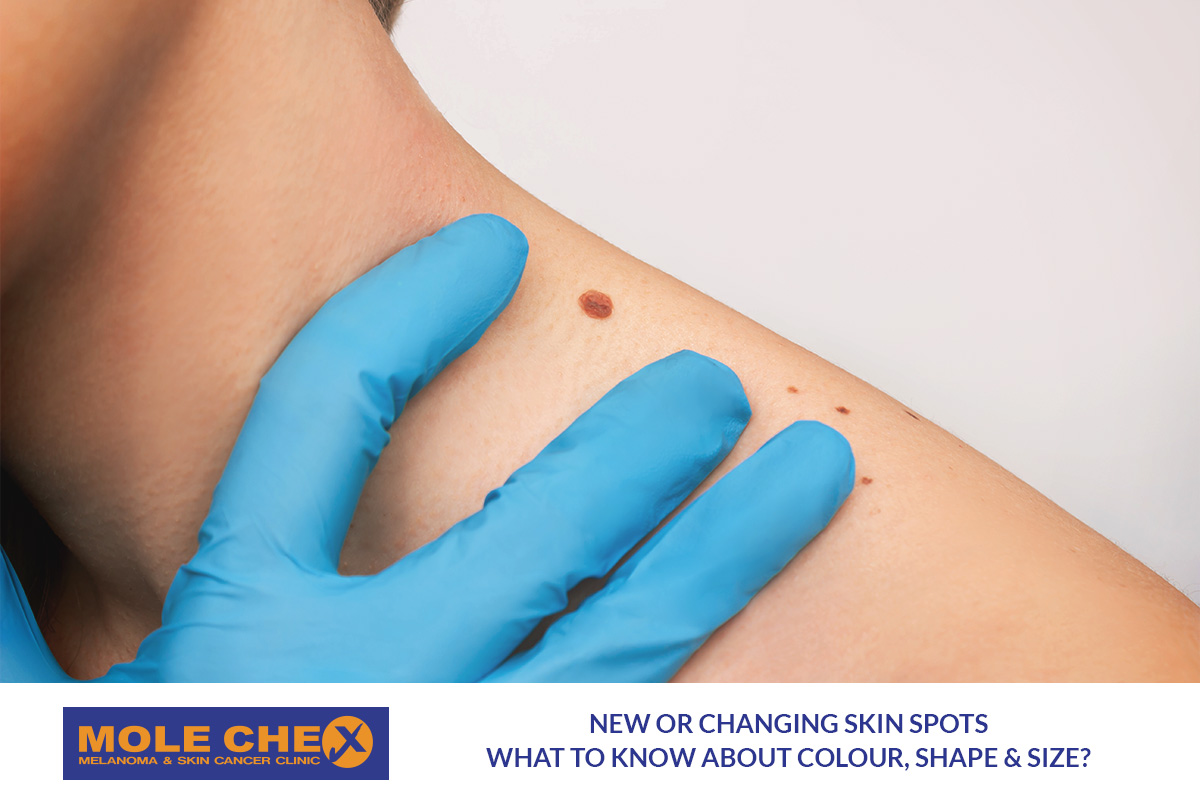
Have you noticed a mole becoming darker, a freckle changing shape or a new spot appearing unexpectedly?
Our skin naturally changes throughout life. However, some changes deserve closer attention, particularly in Queensland’s high-UV environment.
New or changing skin spots can develop for several reasons. Many are harmless, while others may indicate skin conditions requiring medical assessment.
Understanding what to look for can help you recognise unusual changes without trying to diagnose them yourself.
Why Do New or Changing Skin Spots Appear?
Skin markings develop for different reasons, including genetics, ageing, hormonal changes and ultraviolet (UV) exposure.
Moles form when pigment-producing cells grow in clusters. Freckles and sunspots involve changes in skin pigmentation.
Some spots appear gradually, while others become noticeable over a shorter period.
Common causes include:
✅ Sun exposure: UV radiation contributes to freckles, pigmentation changes and skin damage.
✅ Ageing: Certain benign growths and pigmentation changes become more common with age.
✅ Hormonal changes: Pregnancy and hormonal fluctuations can influence skin pigmentation.
✅ Skin conditions: Inflammation, irritation and other dermatological conditions can change skin appearance.
Although many changes are harmless, appearance alone cannot confirm a diagnosis.
Colour Changes: What Should You Look For?
A change in colour can be one of the more noticeable signs of an evolving skin spot.
Many ordinary moles have a relatively consistent colour, ranging from pink or skin-toned to brown or black.
However, some concerning lesions develop irregular pigmentation or multiple colours.
Watch for:
- A brown mole becoming noticeably darker.
- Uneven colouring within an existing spot.
- New black, blue, red, white or grey areas.
- A spot developing a different appearance from nearby moles.
Not every colour change indicates melanoma. Nevertheless, a new or unusual pigmentation pattern deserves medical attention.
Importantly, skin cancer does not always appear dark. Some lesions look pink, red or similar to surrounding skin.
Shape Changes: When Does a Mole Look Different?
Most ordinary moles remain relatively consistent in shape.
Some appear round or oval, while others have less regular outlines.
A changing shape can sometimes indicate an underlying problem.
Look for these features:
- Asymmetry: One side looks noticeably different from the other.
- Irregular borders: Edges become uneven, notched or poorly defined.
- Changing outline: A previously stable spot develops an unusual shape.
- Surface changes: A mole becomes rough, scaly, raised or ulcerated.
An unusual shape does not automatically mean skin cancer.
However, a doctor should assess significant changes, especially when several warning signs appear together.
Size Changes: Does a Growing Mole Matter?
Moles vary considerably in size. Some remain tiny, while others cover larger areas.
Growth matters because certain skin cancers can develop or enlarge over time.
The ABCDE melanoma guide traditionally highlights spots larger than 6 millimetres.
However, melanomas can also measure less than 6 millimetres.
A spot’s growth pattern can matter more than its size alone.
Consider medical assessment when:
- An existing mole grows noticeably.
- A new spot continues enlarging.
- A raised lesion develops or grows quickly.
- A changing spot looks different from your other markings.
Avoid assuming a small spot is harmless simply because it has not reached a particular diameter.
Understanding the ABCDE Warning Signs of Melanoma
The ABCDE guide offers a practical way to recognise potentially concerning skin changes. These signs help identify changes worth discussing with a doctor.
However, the ABCDE guide does not identify every melanoma.
Some nodular melanomas appear raised, firm and growing. They may have an even colour and develop quickly. Seek prompt medical assessment for a new, firm, growing lesion.
Other Skin Changes That Shouldn’t Be Ignored
Skin cancer warning signs extend beyond unusual moles.
Basal cell carcinoma may appear as a pearly lump, scaly patch or sore that repeatedly breaks down.
Squamous cell carcinoma can resemble a thickened, rough or crusted area.
Other symptoms worth checking include:
- Persistent itching or tenderness.
- Unexplained bleeding or crusting.
- A sore that fails to heal.
- A spot that repeatedly heals and reopens.
- A new mark that looks unlike surrounding spots.
These symptoms have several possible causes.
A medical examination helps determine whether further investigation is appropriate.
Are All Changing Skin Spots Dangerous?
No. Many skin changes result from benign conditions.
Freckles may darken with UV exposure. Seborrhoeic keratoses can become more noticeable with age.
Skin inflammation may leave temporary pigmentation changes. Hormonal changes can also affect existing markings.
However, benign and concerning lesions sometimes look similar. A previously harmless mole may also develop new features requiring assessment. Rather than guessing from photographs or online comparisons, seek medical advice about suspicious changes.
Can You Check Your Skin at Home?
Getting familiar with your skin makes unusual changes easier to notice. Choose a well-lit room and use mirrors to examine areas you cannot see directly.
Check your:
- Face, ears, scalp and neck.
- Chest, abdomen, shoulders and back.
- Arms, hands, palms and fingernails.
- Legs, feet, soles and between your toes.
Remember, melanoma can develop on skin that receives little sunlight. Photographs may help you track visible changes between examinations. However, photographs cannot replace a doctor’s assessment.
If you notice a suspicious spot, arrange medical advice rather than waiting for your next routine check.
When Should You See a Skin Doctor?
Consider a professional skin assessment if you notice a new, unusual or changing lesion.
Seek prompt advice when a spot grows rapidly, bleeds without explanation or develops concerning features.
Your personal history can also influence how doctors assess your skin cancer risk.
Relevant factors include previous skin cancer, numerous atypical moles and a family history of melanoma.
There is no single screening schedule suitable for everyone.
Your GP can recommend appropriate monitoring based on your individual circumstances.
Knowing your skin starts with noticing what changes.
If a mole develops a new colour, shape or size, avoid relying on appearance alone. A GP assessment can help determine whether further investigation is necessary.
*Note: The information in the article is for information purposes only. This information is general in nature and does not replace professional medical advice. Please seek doctors’ appointment for actual treatment or medical condition.
Learn more by reading other articles :