
The Truth About a Base Tan in Brisbane: Why Tanning Won’t Protect Your Skin
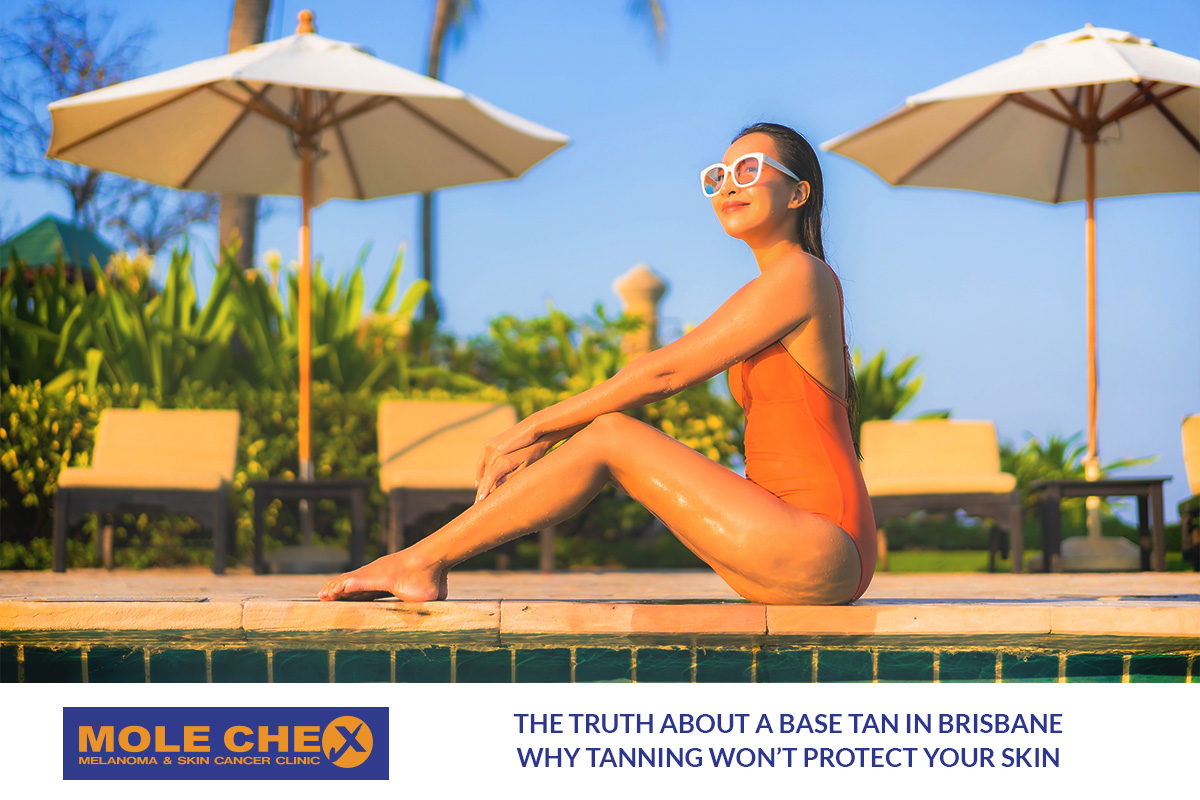
Brisbane’s outdoor lifestyle makes sunshine part of everyday life. Beaches, pools, weekend sport and outdoor dining can all increase UV exposure. That can also keep one persistent tanning myth alive: the idea that getting a “base tan” helps protect your skin.
The truth is quite different. A UV-induced tan does not provide meaningful protection against future sun damage. In fact, the colour change shows that your skin has already responded to UV exposure.
Understanding this matters in Brisbane, where sun protection deserves attention throughout the year.
What Is a Base Tan?
A base tan usually means deliberately tanning before spending more time in strong sunlight.
Some people develop one before a beach holiday. Others tan before summer, festivals or outdoor events. The belief is simple: darker skin will supposedly make later sunburn less likely.
However, tanning through UV exposure requires your skin to respond to radiation. Melanin production can increase after UV exposure, causing the skin to darken. That colour change does not mean your skin has become safely protected.
Instead, it signals that UV exposure has already affected the skin.
Does a Base Tan Protect You from Sunburn?
Not in any reliable or adequate way. Research reviewed by Cancer Council Australia indicates that a UV-induced tan provides only modest protection. The protection has been estimated at roughly SPF 3.
That is far below the level recommended for Australian sun protection.
A base tan can also create a dangerous sense of confidence. Someone who believes they are protected may stay outside longer. They may also delay sunscreen application or skip other protective measures.
That behaviour can lead to greater UV exposure. For Brisbane residents, relying on a tan instead of proper sun protection is particularly risky. Queensland experiences UV levels capable of damaging skin throughout the year.
A Tan Is a Sign of UV Damage
People often associate tanned skin with health, fitness or holidays.
Biologically, however, a UV-induced tan tells a different story. When UV radiation reaches skin cells, the skin responds by increasing or redistributing pigment. This process creates the darker appearance people recognise as a suntan.
The change does not mean the UV exposure was harmless. You also do not need to become visibly sunburnt for UV damage to occur.
Skin can receive harmful UV exposure without becoming red, painful or blistered. This is one reason appearance alone cannot tell you whether your skin has been adequately protected.
Why the Base Tan Myth Matters in Brisbane?
Brisbane residents spend plenty of time outdoors.
A weekend can include gardening, sport, walking, barbecues, swimming and trips to the coast. Even short periods outside can add to cumulative UV exposure.
Queensland guidance recommends thinking about UV rather than temperature. A cloudy or cooler day does not automatically mean low UV. UV radiation can still reach damaging levels when the weather feels comfortable.
That makes the UV Index a more useful guide than temperature. When the UV Index reaches 3 or above, sun protection becomes important. In Queensland, those conditions occur throughout the year.
Checking the daily UV level should therefore become part of a Brisbane skincare routine.
“But I Rarely Burn” Does Not Mean “My Skin Is Safe”
Another common tanning belief involves skin type. People who tan easily may assume they have little skin cancer risk because they rarely burn.
Different skin types respond differently to UV radiation. However, tanning ability does not make someone immune to UV damage.
People with naturally darker skin generally have more natural melanin protection than people with very fair skin. However, skin cancer can affect people across different skin tones.
Sun protection should therefore focus on UV exposure rather than whether someone usually burns.
If your skin becomes darker because of deliberate sun exposure, that change still reflects a response to UV radiation.
What About Fake Tan?
Fake tan differs from a UV-induced suntan.
Self-tanning lotions and many spray tanning products darken the outer appearance of the skin without requiring deliberate UV exposure.
For people who prefer a tanned appearance, this avoids intentionally tanning in the sun.
However, a fake tan should not be treated as sun protection. The darker colour does not automatically provide ongoing protection from UV radiation. Some tanning products may contain sunscreen, but protection depends on the specific product and correct application.
Continue following normal sun protection measures even when wearing fake tan.
What Should You Use Instead of a Base Tan?
Rather than trying to “prepare” your skin through tanning, prepare for Brisbane UV with practical protection.
Use a combination of sun-safe measures whenever protection is required:
- Wear clothing that covers as much skin as practical.
- Apply broad-spectrum, water-resistant SPF 50 or SPF 50+ sunscreen.
- Reapply sunscreen according to the product directions, especially after swimming or sweating.
- Wear a broad-brimmed hat that protects the face, ears and neck.
- Seek shade when practical.
- Wear sunglasses that meet Australian standards.
Sunscreen works best as one part of a broader sun protection routine. It should not become permission to spend unlimited time in direct sunlight.
Does Existing Sun Damage Mean It Is Too Late?
No. Better sun protection can still reduce future UV exposure. You cannot undo past UV exposure by avoiding the sun for one weekend. However, you can change what happens from today onwards.
Start by becoming familiar with your skin. Notice your existing moles, freckles and spots. Pay attention to anything that changes in size, shape, colour or appearance.
Also seek medical advice for new or unusual spots, sores that do not heal, or lesions that bleed repeatedly.
A professional skin assessment can help when you have concerns about a particular spot or your personal skin cancer risk.
Skin Checks and Brisbane’s Outdoor Lifestyle
Sun protection and skin checks serve different purposes. Sun protection aims to reduce future UV damage. A skin check assesses the skin you have now.
At Molechex, our Brisbane doctors provide skin cancer checks, assessment and treatment services. Our doctors have undertaken additional training in skin cancer medicine, and our clinics use dermoscopy during skin assessment where appropriate.
Molechex has clinics in Annerley, Carindale and Coorparoo Junction. A referral is not required for a skin consultation. For people with significant previous sun exposure, many moles or a changing lesion, a doctor can assess individual concerns. They can also discuss whether ongoing skin monitoring may be appropriate.
Replace the “Base Tan” With a Better Brisbane Habit
A base tan may sound like sensible preparation for summer. It is not an effective substitute for sun protection.
The tan itself results from UV exposure. Any small increase in natural protection remains far below recommended sunscreen protection levels.
For Brisbane residents, a better routine starts with the UV Index. Check the UV before outdoor activities. Use suitable clothing, SPF 50 or SPF 50+ sunscreen, a broad-brimmed hat, shade and sunglasses when required.
Most importantly, avoid treating a suntan as proof of healthy skin.
Make Skin Awareness Part of Your Routine
Brisbane sunshine is there to enjoy, but your skin does not need a tan to enjoy it safely.
If you have spent years deliberately tanning, experienced significant sun exposure or noticed a changing spot, consider discussing your skin with a doctor.
At Molechex Skin Cancer and Melanoma Clinic, our Brisbane team can assess moles and skin lesions, discuss individual risk factors and provide ongoing skin cancer care when clinically appropriate.
Understanding the truth about base tans is a simple place to start. Protect the skin you have today rather than deliberately damaging it for supposed protection tomorrow.*Note: The information in the article is for information purposes only. This information is general in nature and does not replace professional medical advice. Please seek doctors’ appointment for actual treatment or medical condition.
*Note: The information in the article is for information purposes only. This information is general in nature and does not replace professional medical advice. Please seek doctors’ appointment for actual treatment or medical condition.
Learn more by reading other articles :