
What to Do After a Skin Check: Your Practical Skin Monitoring Checklist
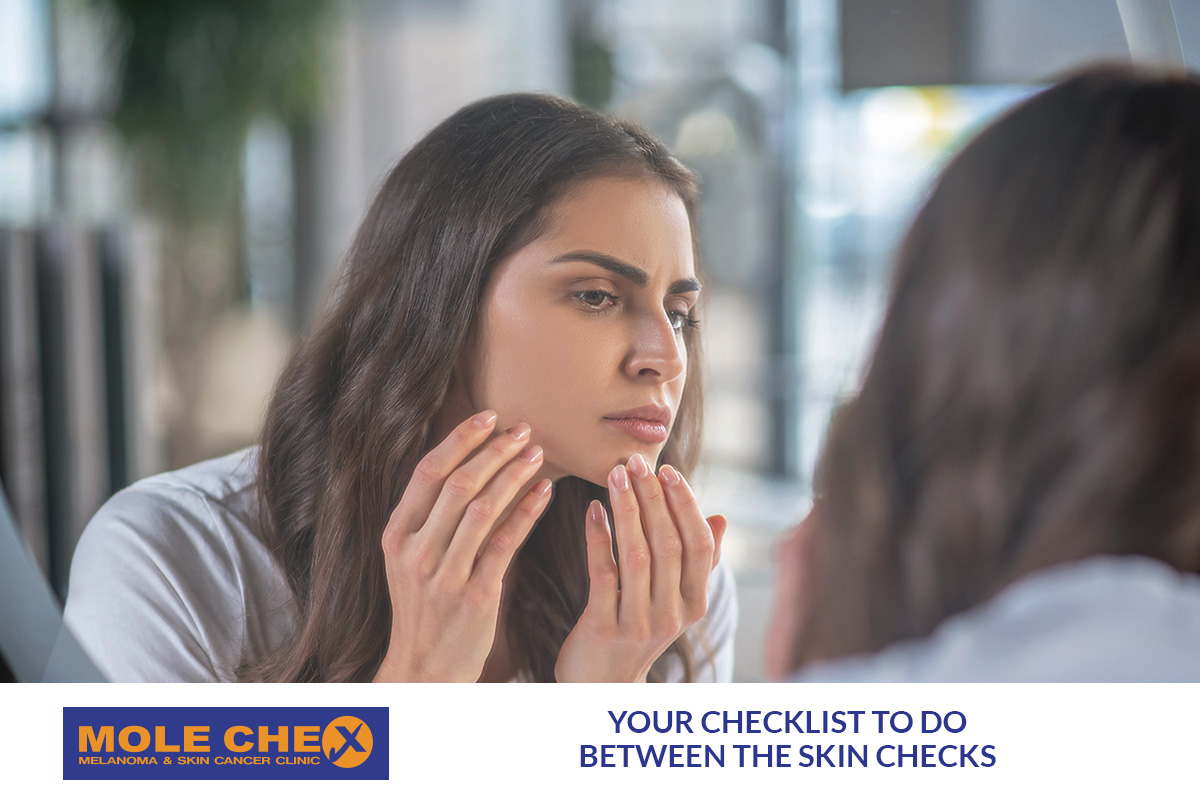
A professional skin check provides valuable information about your current skin health. However, your skin continues to change after you leave the clinic.
Knowing what is normal for your skin can help you notice new or changing spots. Cancer Council Australia recommends becoming familiar with your skin and checking for changes in existing moles, freckles and spots.
At Molechex, we encourage patients to view skin checks as one part of an ongoing skin health routine. Our Brisbane clinics provide comprehensive skin checks, assessment, diagnosis and skin cancer management services.
Here is a practical checklist for what to do after your skin check and between future appointments.
Keep a Record of Your Skin Check Outcome
Before putting your skin check out of mind, make sure you understand the outcome.
Depending on your examination, your doctor may recommend no immediate action, a follow-up appointment or further assessment of a particular lesion. A suspicious spot may require additional examination, monitoring, a biopsy or another management approach.
Patients are advised to ask when their next skin check should occur when no suspicious lesion is found. When further investigation is needed, the doctor should explain the next steps.
Your first post-check task is simple:
- Remember when your next review is recommended
- Note whether any spots need monitoring
- Follow instructions about biopsies or procedures
- Keep relevant pathology and treatment information
- Ask for clarification when medical instructions are unclear
A follow-up schedule should reflect your personal history and risk profile. There is no single skin check interval that suits everyone.
Get Familiar with What Is Normal for Your Skin
One of the most useful things you can do between appointments is learn how your skin normally looks.
Cancer Council Australia recommends regularly looking for new spots and changes to existing freckles or moles. It also advises checking the entire body, including areas that receive little obvious sun exposure.
You do not need to inspect every mole anxiously each day. Instead, develop a regular and organised routine.
Use good lighting and a mirror to view difficult areas. Ask a partner or family member to help check areas such as your back or scalp when appropriate.
Do not forget less visible areas, including:
- Scalp and hairline
- Behind the ears
- Back and shoulders
- Palms and between fingers
- Soles and between toes
- Around the nails
- Back of the legs
The goal is familiarity. When you understand your usual pattern of spots and moles, a significant change may become easier to notice.
Know Which Skin Changes Deserve Attention
Not every new mark is skin cancer. However, changes that persist or evolve deserve medical attention.
Cancer Council Australia recommends watching for new moles and changes in size, outline, colour, surface or symptoms. Warning signs can also include bleeding, weeping, itching, tingling or a spot that looks different from surrounding lesions.
Between skin checks, look for changes such as:
- A new or unusual spot
- A mole changing in size or shape
- New variation in colour
- An irregular or changing border
- A spot becoming raised or forming a lump
- Persistent scaling or crusting
- Unexplained bleeding or weeping
- A sore that does not heal normally
- Ongoing itching, tingling or tenderness
- A spot that looks different from your other spots
The ABCDE guide can help when assessing pigmented lesions. It considers asymmetry, border irregularity, colour variation, increasing diameter and evolution. However, not every skin cancer follows a simple visual checklist.
When a change concerns you, seek medical assessment rather than waiting automatically for your next scheduled skin check.
Avoid Relying on Memory Alone
People often believe they will remember whether a mole has changed. In practice, subtle changes can be difficult to recall over several months.
A simple personal record can help you monitor selected spots. You may note the location and date, especially when your doctor has asked you to observe a particular area.
Photographs may also help provide context when tracking visible changes. However, photographs and smartphone tools do not replace medical diagnosis or a professional skin examination.
Relying on smartphone apps to diagnose skin cancer is not advised because these tools may not provide accurate assessment. Use personal monitoring as an awareness tool, not as a substitute for professional medical advice.
Follow Your Personal Review Schedule
After your skin check, note when your doctor recommends returning.
The correct schedule depends on several factors. These may include your skin type, number of moles, personal skin cancer history, family history, previous sun exposure and other medical risk factors.
People with higher risk may require closer medical surveillance. Factors such as previous skin cancer, family history, significant past sunburn, fair skin, many moles, outdoor exposure and weakened immunity contributes as relevant risk considerations.
Your personal plan matters more than following a generic calendar reminder.
A scheduled appointment also should not stop you from seeking an earlier assessment. A changing, bleeding or non-healing lesion should not simply be watched for months without medical advice.
Make Sun Protection Part of Your Everyday Routine
Your post-skin-check checklist should also include daily UV awareness.
In Queensland, UV exposure can remain significant even when the weather feels cool or cloudy. Cancer Council Queensland advises checking the UV Index rather than judging UV risk by temperature alone. Sun protection is recommended when the UV Index reaches 3 or above.
A combination of protective measures can include:
• Protective clothing
• Broad-spectrum sunscreen used as directed
• A broad-brimmed hat
• Shade where practical
• Sunglasses suitable for UV protection
Think about exposure during ordinary routines, not only beach visits. Driving, walking, gardening, exercise, sport and outdoor work can all contribute to time spent in UV radiation.
Sun protection cannot undo previous UV exposure. However, consistent protection remains an important part of reducing further UV damage.
Check Areas You Might Normally Miss
A quick glance at your face and arms is not a complete self-check.
Skin cancers can occur in areas that people rarely examine. Cancer Council Australia recommends checking the whole body, including areas such as the soles, between fingers and toes, and under the nails.
Brisbane patients who spend time outdoors may naturally focus on highly exposed areas. However, a useful skin monitoring routine should remain systematic.
Start at the head and work down the body in the same order each time. This approach can make it less likely that you miss an area.
A mirror can help with your back and the backs of your legs. Another person may assist with hard-to-see areas when you feel comfortable asking.
Do Not Ignore a Spot Because It Does Not Hurt
Skin cancer does not always cause pain.
Cancer Council Australia notes that skin cancers are often seen before they are felt. This is one reason visual awareness and regular observation matter.
A painless lesion can still require medical assessment. Pay attention to appearance and change, rather than using pain as the only warning sign.
Likewise, do not dismiss a lesion only because it is small. A doctor can assess whether a spot needs closer examination or further investigation.
Keep Your Follow-Up Care Simple and Consistent
After a skin check, many people become highly motivated for several days. Then everyday life takes over.
A simple routine can be easier to maintain than an overly complicated system.
Your ongoing checklist can be:
- Know the result of your last skin check
- Follow any treatment or biopsy instructions
- Remember your recommended review date
- Become familiar with your normal skin
- Check difficult-to-see areas
- Watch for new and changing lesions
- Use sun protection based on UV conditions
- Seek earlier medical advice for concerning changes
Self-monitoring and professional skin checks serve different purposes. One does not replace the other. Molechex also explains that professional skin checks, self-awareness and sun protection work together as parts of a practical skin health routine.
How Molechex Can Help with Ongoing Skin Checks in Brisbane?
Molechex provides skin cancer detection, diagnosis, treatment and follow-up services across Brisbane clinic locations. The clinic offers comprehensive skin checks and skin cancer management according to individual clinical needs.
Our team includes GPs with additional qualifications, certifications and experience across skin cancer medicine, dermoscopy, biopsies, surgical procedures and skin cancer management. Individual qualifications and areas of interest vary between doctors.
We can help patients review new or changing spots, assess skin cancer risk and understand an appropriate follow-up plan. Where clinically required, our doctors can also discuss further investigation and available management options.
For patients who have already completed a skin check, we encourage a practical approach between appointments. Know your skin, follow your recommended review schedule and seek medical advice when something changes.
Make Skin Awareness Part of Your Routine
A skin check is a valuable snapshot of your skin at one point in time. Your checklist afterwards is about noticing what happens next.
Get familiar with your skin. Follow the medical advice given at your appointment. Keep your next recommended review in mind. Protect your skin from UV exposure and arrange an earlier assessment when a spot changes or concerns you.
For Brisbane patients, Molechex provides comprehensive skin checks and ongoing skin cancer care. Our team can assess suspicious lesions, discuss individual risk factors and recommend follow-up based on your medical needs.
*Note: The information in the article is for information purposes only. This information is general in nature and does not replace professional medical advice. Please seek doctors’ appointment for actual treatment or medical condition.
Learn more by reading other articles :