
Can a Sunburn from 10 Years Ago Hurt Me Now?
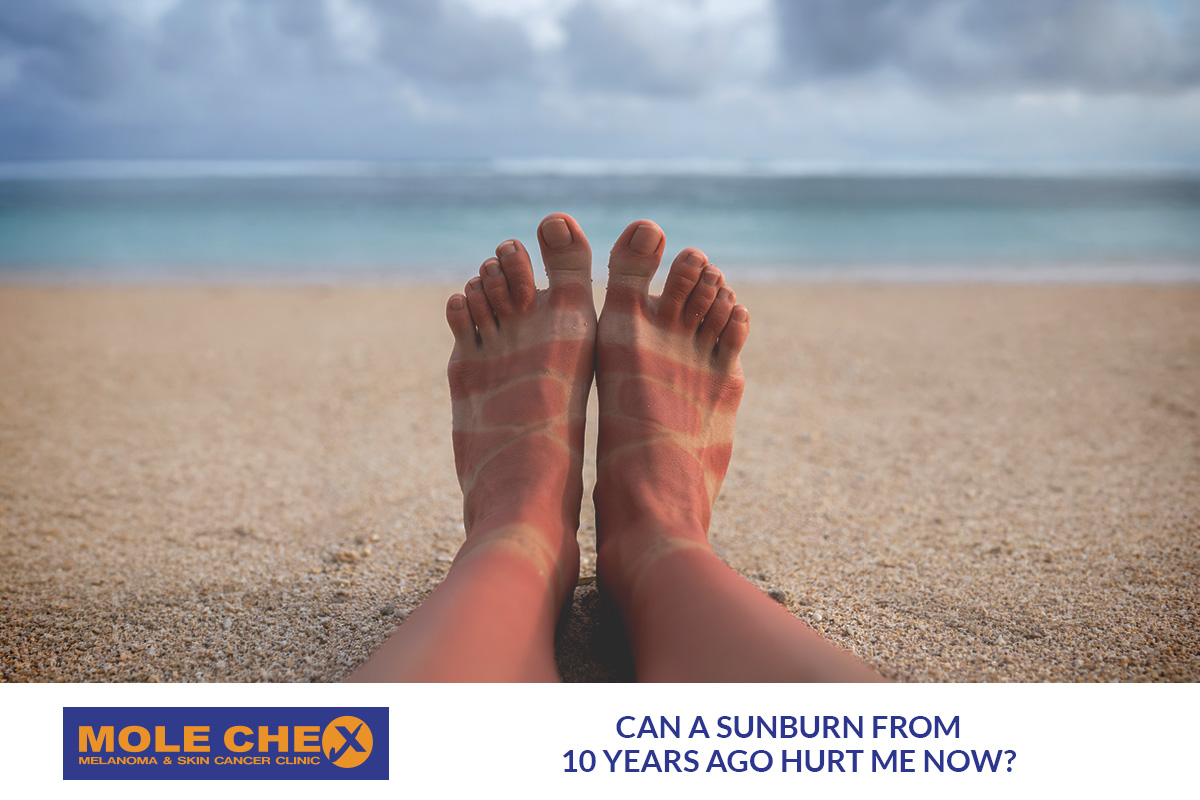
Sunburn is an inflammatory response to too much ultraviolet radiation. Redness and discomfort usually settle, but the exposure has already affected skin cells. The body repairs much of this damage. Some damage may remain or accumulate with later exposure.
Cancer Council Australia describes sunburn as a marker of harmful UV exposure. A history of sunburn is associated with increased melanoma risk. Excessive UV can also cause genetic changes linked with melanoma, basal cell carcinoma and squamous cell carcinoma.
The important word is “risk”. A past burn does not diagnose cancer or predict what will happen. Genetics, skin type, age and total UV exposure also matter.
Why Childhood and Teenage Sunburns Matter?
Sun exposure during childhood and adolescence can influence lifetime skin cancer risk. Cancer Council Australia reports that intense exposure during the first ten years may nearly double lifetime melanoma risk. Painful or severe burns at younger ages also carry particular concern.
This does not make adult sunburn harmless. Repeated burns and cumulative exposure still matter. Intermittent intense exposure has links with melanoma and basal cell carcinoma. Long-term cumulative exposure has strong links with squamous cell carcinoma.
Mention significant past burns, especially blistering burns, when discussing your skin cancer risk with a doctor.
Does Peeling Mean the Damage Has Gone?
Peeling removes damaged surface cells. It does not erase the UV exposure that caused the burn.
Sunburn may involve redness, warmth, swelling, pain or blistering. These signs show that the skin received too much UV. The reaction can take hours to peak, so people may underestimate the exposure.
Moisturiser and cool compresses may ease discomfort. They cannot reverse DNA damage. A tan also does not repair the skin.
Does One Bad Sunburn Cause Skin Cancer?
No single event allows anyone to predict a future diagnosis. Many people remember one dramatic burn, but everyday exposure also adds up.
Australia’s strong UV environment makes consistent protection important, even on cool or cloudy days.
A severe burn may increase risk without guaranteeing disease. Some people also develop UV damage without obvious blistering.
What Skin Changes Should You Check?
Past sunburn does not tell you where a future skin cancer might appear. Check your whole skin, including areas that received little direct sun.
Look for:
• A new spot, lump or scaly patch
• A mole changing in size, shape, colour or texture
• A sore that does not settle within several weeks
• A spot that repeatedly bleeds, crusts or itches
• A lesion that looks different from your other spots
• A fast-growing, shiny, pale, pink or thickened area
A medical review is recommended for new or changing lesions and sores that do not heal. Skin cancer can occur anywhere, although it commonly appears on sun-exposed areas.
Do not rely on pain, an app or a photograph. Images can support monitoring, but they cannot replace a clinical assessment.
Can You Undo Past Sun Damage?
You cannot prevent an old burn after it has happened. However, you can reduce further UV exposure and monitor your skin from today.
Check the UV Index before outdoor activity. Use all five forms of sun protection when the UV Index reaches three or above:
• Wear covering clothing
• Apply broad-spectrum, water-resistant SPF50 or SPF50+ sunscreen
• Choose a broad-brimmed hat
• Seek shade
• Wear close-fitting sunglasses
Reapply sunscreen every two hours. Apply it again after swimming, sweating or towel drying. Sunscreen supports protection but does not replace clothing and shade. ARPANSA and Cancer Council recommend combining all five measures.
Should I Book a Skin Check Because of an Old Sunburn?
A past sunburn forms one part of your risk profile. Other factors include fair skin, many moles, previous skin cancer and family history. Outdoor work, immune suppression and repeated UV exposure may also matter.
Consider an annual skin check when you have skin cancer risk factors. However, one schedule does not suit everyone. A doctor should recommend timing based on your history and examination.
Arrange an earlier appointment when a spot changes or concerns you. Do not wait for a routine review when a lesion grows, bleeds or fails to heal.
Only a qualified doctor can properly assess a suspicious lesion. A visual check cannot always confirm the diagnosis. The doctor may recommend dermoscopy, monitoring or a biopsy. Pathology may then confirm whether skin cancer is present.
Why Skin Checks Matter in Brisbane
Brisbane residents often spend time outdoors throughout the year. Work, sport and family activities can create frequent UV exposure. Queensland’s location also places many communities closer to the equator, where skin cancer rates tend to be higher.
A professional skin check can assess hard-to-see areas, including the scalp, back and ears.
Self-checks remain useful between appointments. Learn your usual pattern of spots and note meaningful changes. Professional checks and self-awareness serve different purposes. Neither replaces daily sun protection.
Your Past Matters, but Your Next Steps Matter Too
A sunburn from ten years ago may still matter because UV damage can contribute to future skin cancer risk. It does not mean cancer is present, and it should not cause panic.
Record significant past burns in your health history. Protect your skin whenever UV levels require it. Check for new or changing spots and seek medical advice promptly when something looks unusual.
Molechex can help Brisbane patients understand their individual risk and arrange an appropriate skin assessment. Only a doctor can diagnose a suspicious lesion. A definitive diagnosis may require biopsy and pathology.
*Note: The information in the article is for information purposes only. This information is general in nature and does not replace professional medical advice. Please seek doctors’ appointment for actual treatment or medical condition.
Learn more by reading other articles :